A Busy Cafeteria in Dubai Tells Only Half the Story
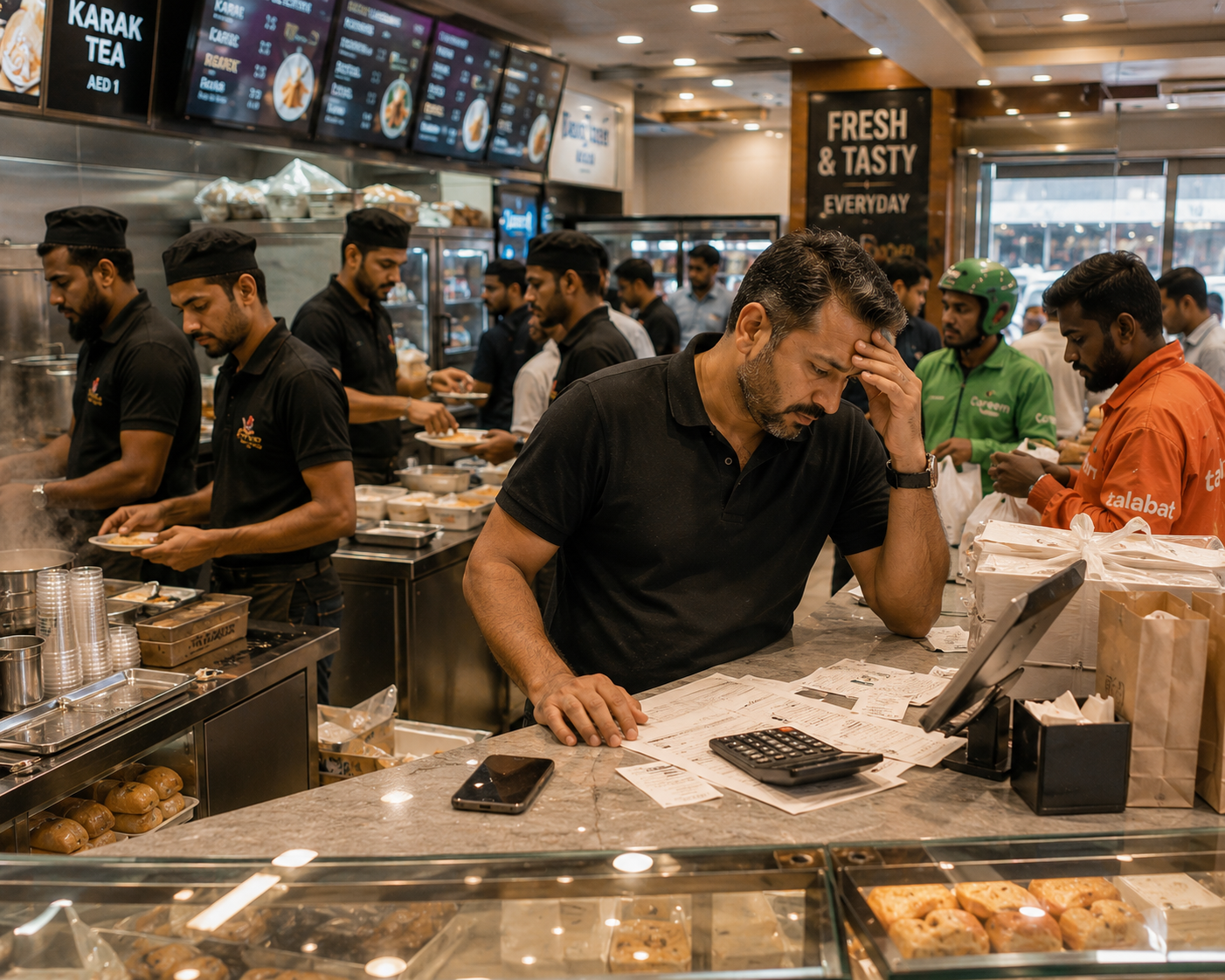
Walk into a neighborhood cafeteria in Dubai during peak hours and the business appears to be thriving. Delivery riders move in and out, takeaway orders stack up, and dine-in tables turn over quickly throughout the day.
From the outside, it looks like a reliable, high-volume business. Given the consistent demand for affordable food—especially in dense areas—the assumption is simple: steady activity should translate into steady profit.
But that assumption rarely holds when examined closely.
Many cafeterias in Dubai operate in one of the most competitive segments of the food market. Despite strong daily sales, profitability is constrained by rent, licensing costs, delivery commissions, and tight pricing expectations. The business looks active, but the underlying economics are far more fragile.
The Operating Model: Low Price, High Volume
Most cafeterias in Dubai follow a predictable structure: low-ticket pricing combined with high transaction volume. Items such as tea, sandwiches, juices, and snacks are priced to attract repeat customers.
This model works because demand is consistent, but it also limits flexibility.
Daily operations typically involve:
- bulk purchasing of ingredients
- multiple staff shifts
- long operating hours
- reliance on takeaway and delivery
Where the Margin Gets Compressed
Cafeterias cannot easily increase prices. Customers are highly price-sensitive, and competition is often located within a short walking distance.
At the same time, costs are relatively fixed and difficult to reduce. Rent, staff wages, and utilities must be paid regardless of daily performance, while ingredient prices fluctuate.
| Cost Pressure | Impact on Business |
| Fixed rent | Reduces flexibility |
| Staff salaries | Daily operating burden |
| Ingredient costs | Variable margin pressure |
| Delivery commissions | Direct margin reduction |
This creates a narrow margin environment where efficiency is not optional—it is essential.
This is also where pricing strategy for small businesses becomes less about maximizing profit and more about protecting viability. (internal link)
The Real Entry Cost: Setup and Licensing in Dubai
Before a cafeteria begins operations, a significant amount of capital is required. This is one of the most underestimated aspects of the business.
In areas such as Deira or Karama, a small cafeteria typically requires:
| Setup Component | Estimated Cost (AED) |
| Trade license & approvals | 10,000 – 15,000 |
| Municipality & food safety approvals | 5,000 – 8,000 |
| Kitchen equipment | 25,000 – 40,000 |
| Interior fit-out | 20,000 – 35,000 |
| Initial inventory | 5,000 – 8,000 |
| Rent & utility deposits | 15,000 – 25,000 |
| Total Initial Investment | 80,000 – 130,000 AED |
This capital is committed before a single sale is made.
Unlike daily operating costs, this investment must be recovered over time. It directly affects how long the business needs to remain stable before it becomes financially worthwhile.
A Realistic Case: Cafeteria in Deira
To understand how the business performs, consider a simplified but realistic case of a cafeteria operating in Deira.
Daily Revenue
- Average orders per day: 220–260
- Average order value: AED 10–12
- Estimated daily revenue: ~AED 2,500
This translates to approximately AED 75,000 per month under stable conditions.
At first glance, this appears to be a strong revenue base for a small operation.
Monthly Cost Structure
| Cost Component | Monthly Estimate |
| Rent | AED 12,000 |
| Staff salaries (4–5 workers) | AED 15,000 |
| Raw materials | AED 25,000 |
| Utilities | AED 3,500 |
| Delivery commissions | AED 6,000 |
| Miscellaneous | AED 2,500 |
| Total Costs | AED 64,000 |
Profit and Payback Reality
- Monthly revenue: ~AED 75,000
- Monthly costs: ~AED 64,000
- Net monthly profit: ~AED 11,000
On paper, the business is profitable.
However, when viewed against the initial investment of AED 80,000–130,000, the picture changes.
Payback Period
- Estimated recovery time: 9–12 months (ideal scenario)
This assumes:
- consistent sales
- no major disruptions
- controlled costs
In practice, fluctuations in demand or unexpected expenses can extend this timeline significantly.
This distinction is important. Profit measures performance, but return on investment determines whether the business is worth pursuing.
What the Numbers Don’t Show
The model above assumes stability, but real operations rarely follow a consistent pattern.
Daily performance is affected by:
- seasonal demand
- weather conditions
- nearby competition
- delivery fluctuations
Even a 10–15% drop in revenue can reduce profitability significantly, given the fixed cost structure.
The Delivery Dependency
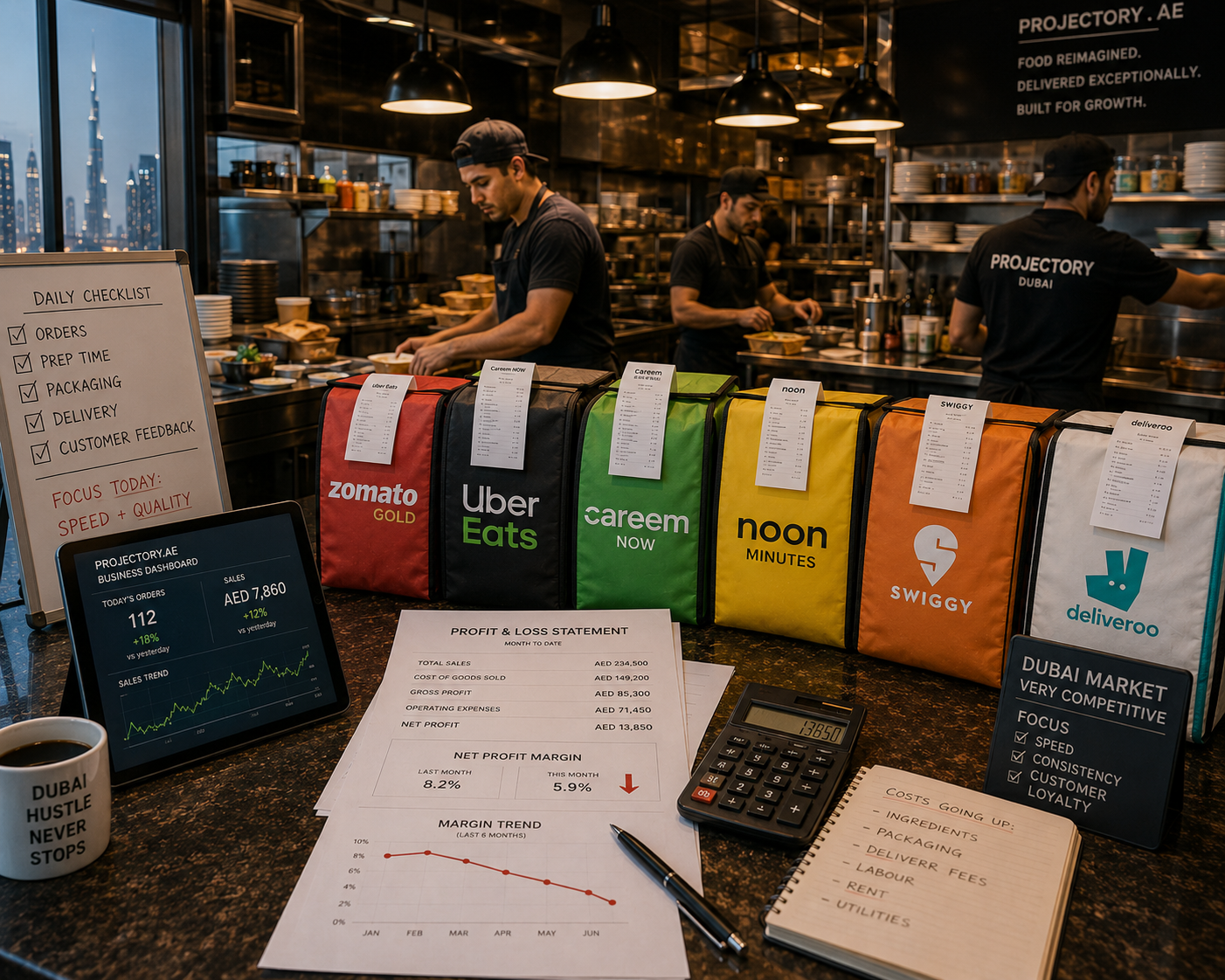
Many cafeterias rely heavily on platforms like Zomato and Swiggy.
While these platforms increase visibility and order volume, they also reduce margins through commissions and influence pricing decisions.
This dependency creates a trade-off between volume and profitability—something explored in platform-driven models like Zomato & Swiggy dependency in small food businesses.
Where Most Cafeterias Struggle
The difference between a stable cafeteria and a struggling one often lies in operational discipline.
Common issues include:
- inefficient inventory management leading to wastage
- reluctance to adjust pricing despite rising costs
- overstaffing during low-demand periods
These are not large strategic mistakes, but small inefficiencies that compound over time.
Cash Flow Pressure
Even when the business is profitable, cash flow can become tight due to:
- bulk purchasing requirements
- periodic maintenance costs
- rent cycles
This reinforces a critical point: profitability does not guarantee liquidity. The timing of cash matters just as much as the amount, as explained in cash flow vs profit.
What Separates Survival from Stability
Most cafeterias operate at a survival level—covering costs and generating modest income.
Fewer achieve stability.
Stability depends on:
- consistent repeat customers
- controlled costs
- efficient operations
- disciplined pricing
It is not driven by expansion, but by refinement.
Small improvements in margin—through better sourcing, pricing, or reduced wastage—can significantly improve long-term outcomes.
What This Case Actually Shows
This case highlights a broader business reality.
High activity does not guarantee strong profitability. A business can generate steady daily sales and still struggle if margins are thin and costs are not controlled.
In markets like Dubai, the initial capital requirement adds another layer of pressure. The business must not only sustain daily operations but also recover its upfront investment over time.
This shifts the focus from:
- “How much revenue is generated?”
to - “How efficiently is revenue converted into retained profit?”
Understanding this distinction early leads to better decision-making.
Busy Doesn’t Mean Profitable
A cafeteria in Dubai can appear successful from the outside—constant activity, steady orders, and visible demand.
But profitability depends on what happens behind the counter.
Margins are shaped by costs that customers never see. Decisions around pricing, staffing, sourcing, and operations determine whether the business remains sustainable.
The difference between a busy cafeteria and a profitable one is not measured by footfall—it is measured by how much of that activity translates into retained earnings. That difference is where most small food businesses succeed or fail.