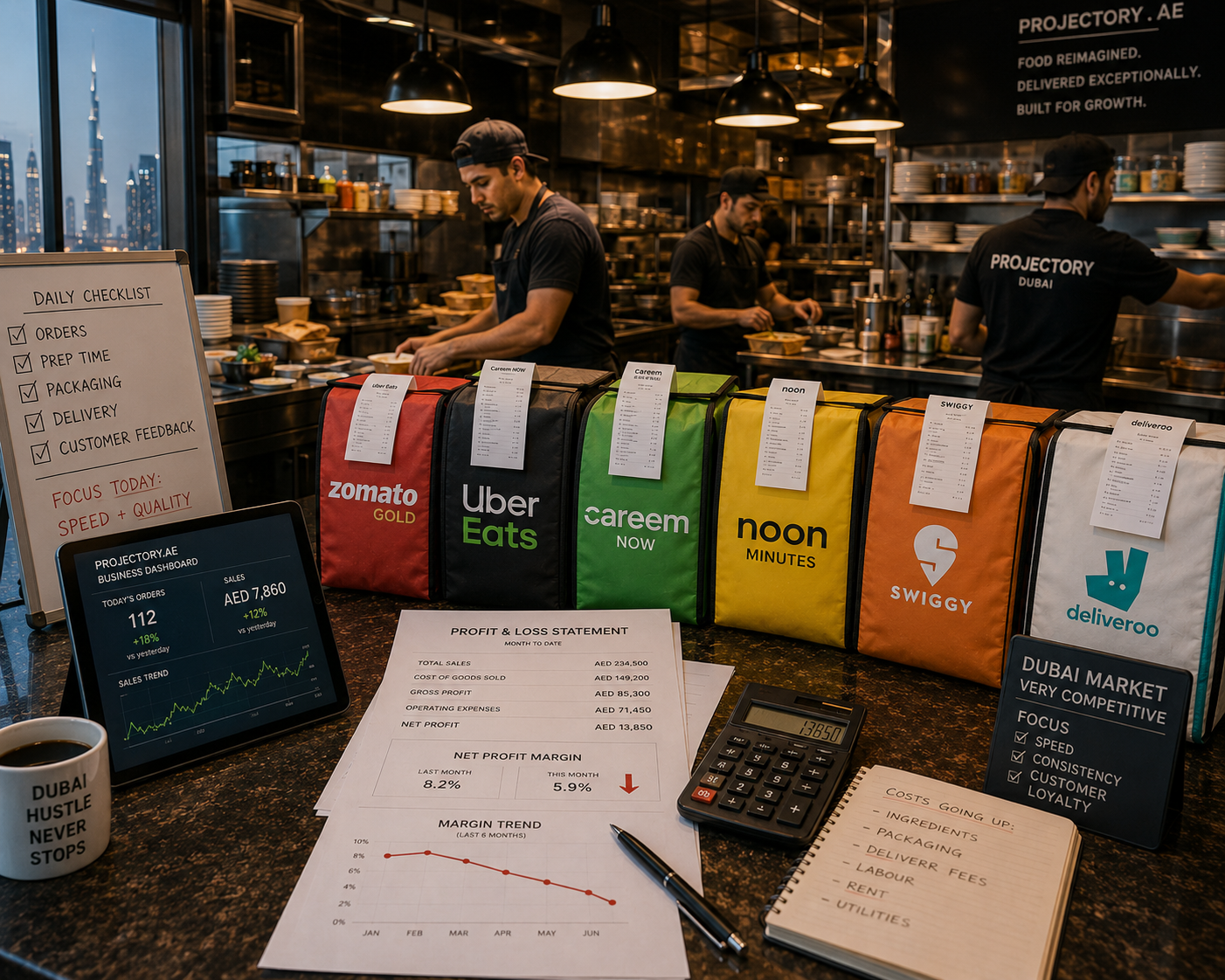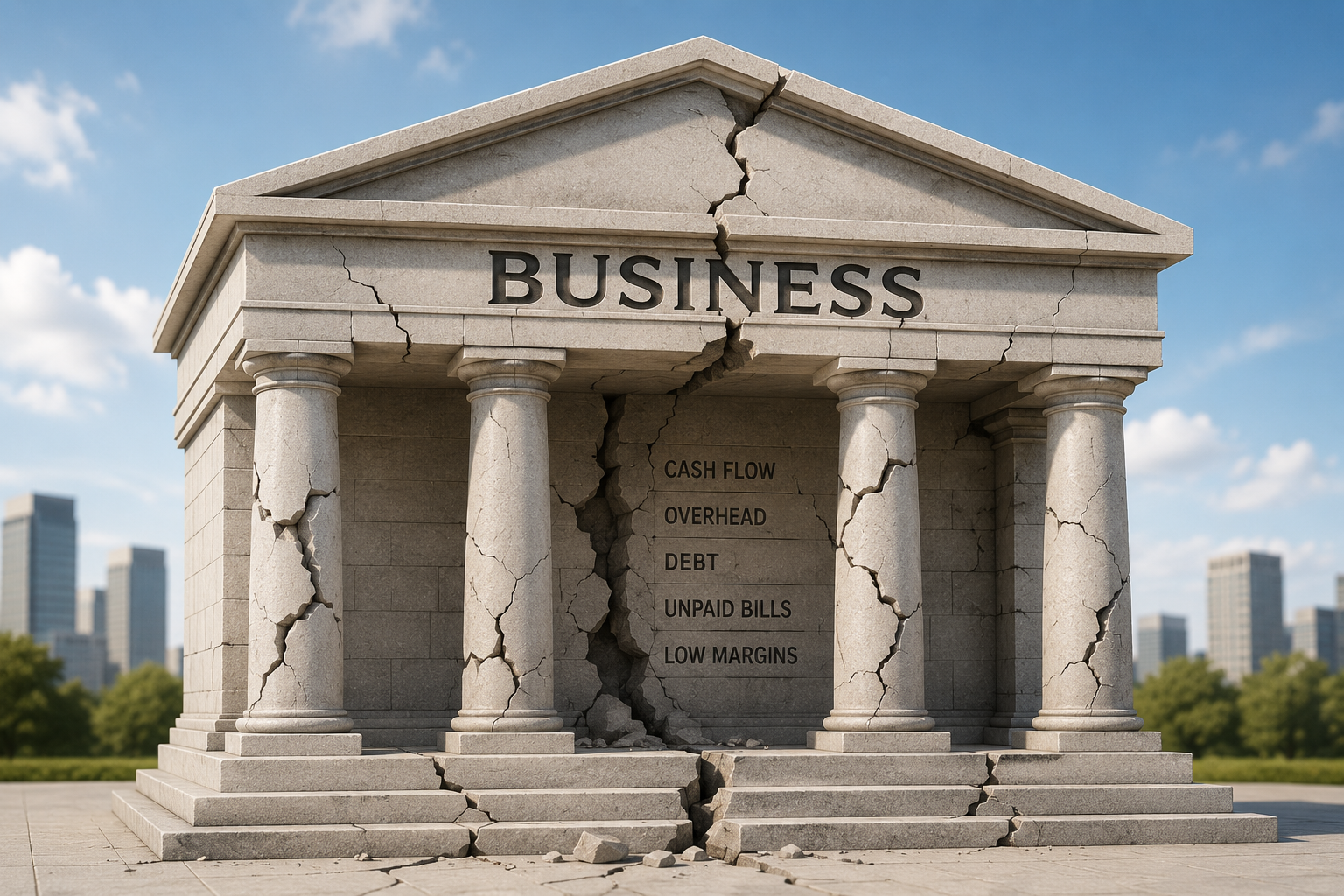
Failure Rarely Looks Like Failure at the Beginning
Most small businesses do not begin with visible problems. In the early stages, activity is high and momentum feels real. Customers show interest, sales begin to happen, and the business appears to be moving forward.
From the outside, this stage often looks like success in progress. There is movement, engagement, and a sense that the business has found its direction.
But beneath this surface, the structure of the business is still forming. Costs are not fully understood, demand patterns are not yet stable, and operational processes are still evolving.
Because everything feels active, early warning signs are often overlooked. Small inefficiencies, minor losses, and temporary imbalances are dismissed as part of the process.
Over time, these small gaps begin to accumulate. What starts as manageable friction gradually turns into structural pressure. Failure, in most cases, does not arrive suddenly. It develops quietly, long before it becomes visible.
The Misconception: “Bad Ideas Fail”
A common explanation for failure is that the business idea was not strong enough. While this can happen, it is not the primary reason most businesses fail.
Many businesses fail despite having clear demand and viable products. Customers exist. Sales happen. Interest is real.
The issue lies in execution.
A business can have a good idea but still fail if the structure around it is weak. Costs may not align with pricing. Operations may not support demand efficiently. Cash flow may not sustain daily activity.
This is why early validation—explored in how to validate a business idea—is only one part of the process. Validation confirms that demand exists. It does not confirm that the business model is sustainable.
The difference between a viable idea and a sustainable business lies in how the system is built around that idea.
The Early Growth Trap
Initial growth is often misinterpreted as stability.
When a business begins to see consistent orders, it creates confidence. Expansion decisions follow. More inventory is purchased, additional staff are hired, and operations are scaled to meet perceived demand.
At this stage, growth feels like progress.
However, growth introduces new financial requirements. More inventory requires more upfront cash. Increased operations lead to higher fixed costs. The business becomes larger, but also more demanding.
If this expansion is not supported by adequate financial structure, growth becomes a source of pressure rather than strength.
This dynamic is closely tied to working capital, where increasing activity requires increasing liquidity—explored in working capital explained.
The business grows in size, but its ability to sustain that size does not grow at the same rate.
Revenue Can Hide Structural Weakness
Revenue is the most visible indicator of business performance. It is also one of the most misleading.
A business generating consistent sales appears healthy. The presence of customers creates confidence. However, revenue alone does not reveal whether the business is structurally sound.
Behind steady revenue, several issues may exist:
- margins may be too thin
- costs may be rising faster than prices
- demand may be inconsistent
- operations may be inefficient
These issues do not immediately disrupt the business. They reduce its resilience.
Over time, the gap between revenue and retained profit becomes more significant. The business remains active, but its financial foundation weakens.
This is why focusing only on sales volume often leads to misjudgment of business health.
Pricing Errors Don’t Fail Businesses Immediately
Pricing decisions are rarely corrected early. In many cases, they are based on initial assumptions or competitive pressure.
At the start, lower pricing helps attract customers. It creates traction and builds early demand. Because revenue is coming in, the pricing appears to work.
But pricing interacts directly with cost structure.
As costs increase—through inflation, operational inefficiencies, or scale—pricing must adjust. When it does not, margins begin to compress.
This compression is gradual. It does not cause immediate failure. Instead, it reduces flexibility.
Over time, the business loses its ability to absorb fluctuations, invest in improvements, or sustain unexpected costs.
This pattern reflects the challenges discussed in pricing strategy for small businesses, where pricing must evolve with the business rather than remain fixed.
Underpricing is not a visible failure point—it is a slow structural weakness.
Cash Flow Problems Begin Before They Are Visible
Cash flow issues are often identified as the final cause of failure. In reality, they are the result of earlier decisions.
A business may appear profitable while still experiencing cash shortages. This happens because profit and cash flow operate on different timelines.
Revenue may be recorded, but payments may be delayed. Expenses, on the other hand, are immediate.
This creates a mismatch.
Over time, this mismatch accumulates. The business continues operating, but liquidity becomes tighter. Payments are delayed, purchasing becomes constrained, and operations begin to feel pressure.
This dynamic is explained more clearly in cash flow vs profit, where accounting profit does not reflect actual financial position.
By the time cash flow problems become visible, they have already been developing for a significant period.
Dependency Reduces Control Over Time
Another factor that contributes to failure is dependency on external systems.
Businesses often rely on:
- delivery platforms
- marketplaces
- specific suppliers
- limited customer segments
Initially, these dependencies enable growth. They provide access, visibility, and operational support.
Over time, however, they reduce control.
The business becomes reliant on factors it cannot influence. Changes in platform policies, supplier pricing, or customer behavior begin to affect performance directly.
This is particularly visible in platform-based models, as discussed in food delivery platform dependency, where growth is tied to external systems rather than internal strength.
Dependency is not immediately harmful. It becomes risky when it replaces control.
Operational Complexity Grows Faster Than Capability
As businesses expand, operations become more complex.
Managing inventory, coordinating staff, maintaining quality, and handling customer demand require structured systems. Many businesses expand before building these systems.
This creates inefficiencies.
Small issues—delays, errors, inconsistencies—begin to appear more frequently. Costs increase, service quality becomes uneven, and customer experience declines.
These are not dramatic failures. They are gradual declines in operational effectiveness.
Without structure, complexity becomes difficult to manage.
The Illusion of Stability
One of the most dangerous stages in a business lifecycle is the phase where everything appears stable.
Revenue is consistent. Customers are present. Operations are functioning.
This creates a sense of control.
But beneath this surface, underlying pressures may already exist. Margins may be narrowing, costs may be rising, and cash flow may be tightening.
Because the business is still operating, these issues are often ignored.
Stability, in this context, is not strength—it is a temporary balance.
When that balance is disrupted, the impact appears sudden.
Why Failure Feels Sudden — But Isn’t
When a business fails, it often appears abrupt. From the outside, it looks like a sudden collapse.
In reality, failure is the result of accumulated pressure.
Small issues—pricing gaps, cost inefficiencies, delayed payments, operational weaknesses—build over time. Each issue alone may seem manageable.
Together, they create a system that cannot sustain itself.
Failure becomes visible only when the combined pressure exceeds the business’s ability to adapt.
What Actually Prevents Failure
Avoiding failure is not about eliminating all risks. It is about identifying and managing them early.
Businesses that sustain themselves tend to focus on:
- maintaining healthy margins
- adjusting pricing as costs change
- managing working capital carefully
- retaining control over customer relationships
These actions are not reactive. They are continuous.
The difference between businesses that survive and those that fail often lies in how early these adjustments are made.
Sustainability Is Built Through Discipline
Sustainability is not an outcome of activity. It is the result of discipline.
A business becomes sustainable when it consistently:
- aligns pricing with costs
- maintains sufficient margins
- manages cash flow effectively
- controls operational complexity
These are not one-time decisions. They are ongoing processes.
Businesses that assume sustainability based on early success often struggle later. Those that build discipline early are better prepared for growth and uncertainty.
Failure Is a Process, Not an Event
The most important understanding is this:
Failure is not a single moment. It is a process.
It begins with small inefficiencies and misaligned decisions. Over time, these create structural weaknesses. The business continues to operate, but with increasing pressure.
Eventually, the system reaches a point where it can no longer sustain itself.
Understanding failure as a process changes how businesses are built. Instead of reacting to problems, attention shifts to identifying early signals.
Businesses Don’t Collapse — They Gradually Lose Strength
Most businesses do not collapse suddenly. They lose strength over time.
Margins decline gradually. Flexibility reduces slowly. Control weakens incrementally.
By the time failure becomes visible, the structure has already eroded.
This is why early awareness matters more than late correction.
Businesses that recognize these patterns are not immune to failure—but they are far more capable of preventing it.